
Gastroenterology Procedure Billing: Challenges and Best Practices
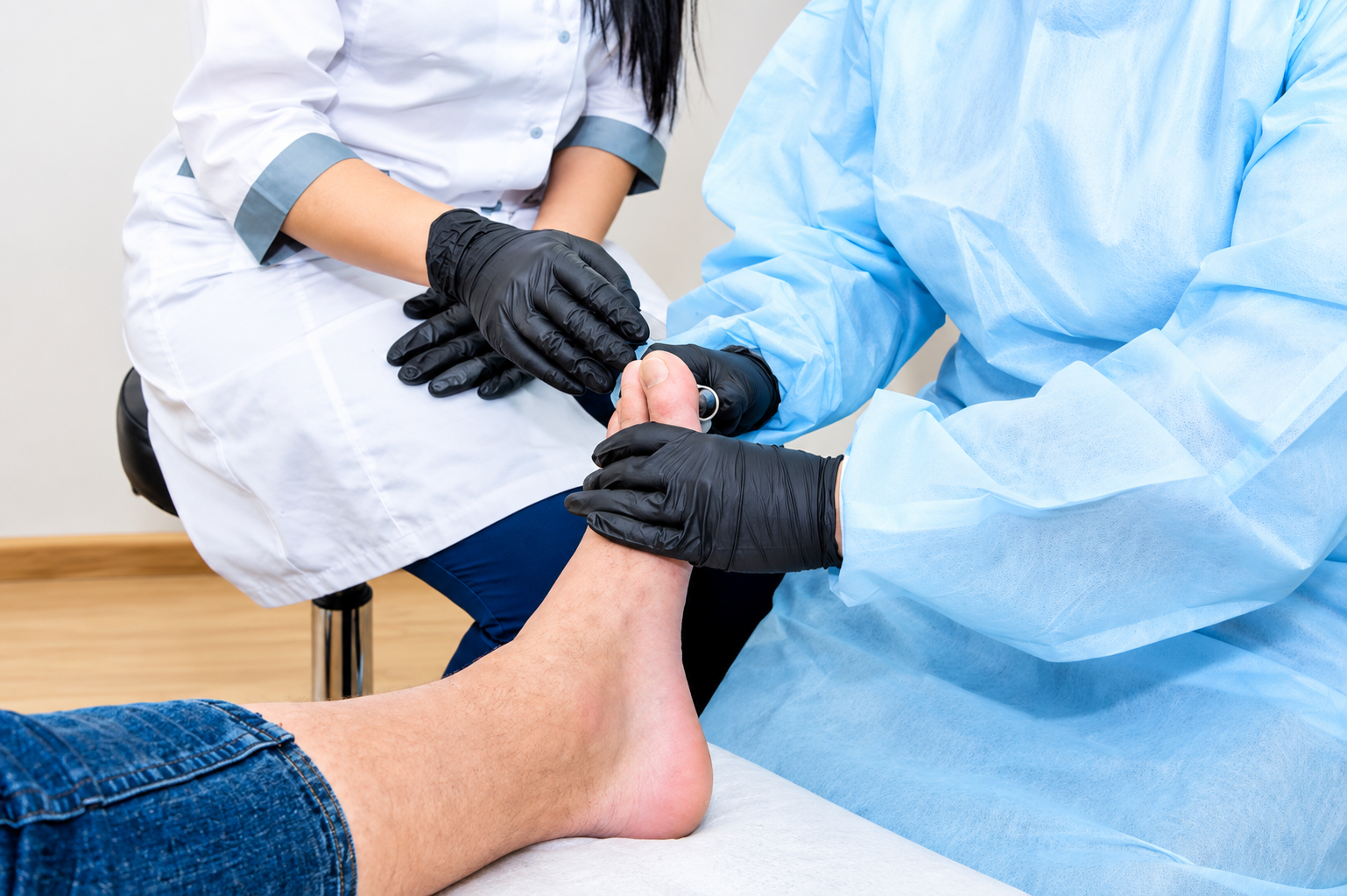
Learn why GI procedure billing is complex and how to improve it, with a checklist, rejection vs. denial guide and metrics from Sirius Solutions Global.

Practical insights on medical billing, coding, denials, credentialing, prior authorization, A/R management, and revenue cycle trends — written to help healthcare practices make better financial decisions.
Adoption survey data, where AI is genuinely reducing denials and cost-to-collect today, and where the gap between hype and results still is.
Read Article
Learn why GI procedure billing is complex and how to improve it, with a checklist, rejection vs. denial guide and metrics from Sirius Solutions Global.

Discover top strategies for gastroenterology claim submissions in 2026. This manual explores the entire lifecycle—from patient intake to final payment—highlighting rejection troubleshooting and essential performance indicators.
A full schedule doesn't guarantee full collections. See the 10 revenue cycle KPIs that reveal where dental claims stall, balances age, and payments slip through.
A 2026 guide to D3330, D3221, and D9110: how molar root canal therapy, pulpal debridement, and palliative pain treatment differ, and common billing mistakes to avoid.
A practical guide to CDT code D4381: covering documentation, common billing errors, how Aetna's and Cigna's 2026 policies differ, and a denial-management workflow.
A practical 2026 framework for dental practice workflow optimization: eight operational areas worth standardizing, a self-assessment tool, a performance dashboard, and common implementation mistakes to avoid.
A 2026 guide to CDT codes D1206 and D1208: the varnish vs. non-varnish fluoride distinction, documentation essentials, and common dental billing mistakes to avoid.
A 2026 guide to CDT code D7240: the anatomical-crown rule that separates it from D7230 and D7241, documentation essentials, and common billing mistakes.
A 2026 guide to ICD-10 code M25.512 (pain in left shoulder): what the code means, how it differs from related codes, and common billing mistakes.
A 2026 guide to ICD-10 code M25.562 (pain in left knee): what the code means, how it differs from related codes, and common billing mistakes to avoid.
A 2026 guide to ICD-10 code M25.50 (pain in unspecified joint): what the code means, when documentation supports it, and common mistakes that slow claims.
A practical field guide to ICD-10-CM M54.17: what it covers, how it differs from M54.16, M54.18, and sciatica codes, and the documentation to check first.
A code-accurate walkthrough of ICD-10-CM G50.0 — what it means, when it applies, and how it compares to G50.1, G50.8, and G50.9.
A practical field guide to ICD-10-CM M54.12: what it covers, how it differs from M54.2 and M50.12, and the documentation to check before billing.
A patient can keep hurting after surgery, but "pain after surgery" doesn't by itself answer the coding question. This 2027 guide walks billing teams through when G89.28 actually fits.
A cancer diagnosis alone doesn't answer the G89.3 coding question. This 2027 guide walks through what the documentation needs to show and how sequencing changes.
A chart showing years of pain after an injury doesn't automatically mean G89.21 is the right code. See what chronic pain due to trauma coding requires in 2027.
An injury may be obvious in the chart, but whether G89.11 is the right code depends on documentation and why the patient was actually seen.
G89.4 ICD-10-CM chronic pain syndrome: when documentation supports it, how it differs from G89.2, and 2027 coding and billing guidance.
Tort reform shaped Texas's legal environment — not payer contracts. See where ASC revenue cycles still leak in 2026, and what to check before it costs you.
Where revenue leakage hides in an optometry billing operation — medical vs. vision, documentation gaps, and what to watch in Kentucky in 2026.
A wound-care claim reaches the billing queue looking routine, but weeks later it's stuck in A/R. Discover 7 places wound-care revenue commonly gets delayed or denied.
A/R doesn't just show what's owed — it shows where the revenue cycle broke down. See how Massachusetts orthopedic practices can close A/R gaps in 2026.
A credentialing application can look complete and still stall. See 10 common mistakes, the 4-C check, and how to catch problems early.


A credentialing application stuck on "pending" for months? Use this 6-step diagnostic to find out what it's actually waiting on.
A neurology claim can be coded correctly and still get denied. This guide walks through where neurology billing problems actually originate and how to fix them.
OB/GYN credentialing in 2026: what affects payer enrollment timing, a 6-phase framework, a visibility self-check, and a multi-payer offer.
A breakdown of TRICARE East provider credentialing in 2026, including certification, the Humana Military network status, and what to verify before billing.
A practical 2026 breakdown of CVS Caremark pharmacy credentialing — what actually separates enrollment from network participation, how the Pre-Enrollment Questionnaire and Pharmacy Portal work, and what to verify before you bill.
Kaiser Permanente credentialing isn't one nationwide process. This guide helps therapists identify their region's pathway, prepare documents, and confirm billing readiness.
Interested in joining the Kaiser Permanente Colorado network? This guide walks the current request form, contracting, and what to verify before your first claim.
How credentialing, recredentialing, enrollment, and provider data connect to network accuracy.
CPT 28292 covers bunionectomy with proximal phalanx base resection. This guide covers operative note documentation and how to distinguish it from osteotomy codes.
CPT 62323 covers lumbar interlaminar epidural injections. This guide breaks down the transforaminal distinction, imaging bundling rules, and denial prevention.
CPT 28470 covers closed treatment of a metatarsal fracture without manipulation. This guide covers multiple-fracture billing rules and documentation needs.
CPT 11057 covers paring more than 4 lesions. This guide covers documentation, medical necessity, and how to prevent avoidable routine foot care denials.
CPT 11056 covers paring 2 to 4 corns or calluses. This guide covers documentation, the 11055 vs 11056 distinction, and how to prevent podiatry claim denials.
CPT 97597 covers selective wound debridement without anesthesia. This guide covers documentation, coding rules, and how to avoid claim denials.
CPT 11042 covers surgical debridement of subcutaneous tissue. This guide covers documentation depth, area measurement, and how to prevent avoidable claim denials.
CPT 11720 covers debridement of 1 to 5 nails. This guide covers documentation, medical necessity, and how to prevent avoidable routine foot care denials.
HCPCS E1390 covers the stationary oxygen concentrator. This guide covers documentation, Medicare modifier rules, and how to prevent avoidable DME claim denials.
HCPCS E0720 covers a two-lead TENS device. This guide covers documentation, medical necessity, and how to prevent avoidable DME claim denials.
HCPCS E0260 covers a semi-electric hospital bed. This guide covers documentation, medical necessity, and how to prevent avoidable DME claim denials.
HCPCS E0143 covers a folding, wheeled walker. This guide covers documentation, medical necessity, and how to prevent avoidable DME claim denials.
HCPCS K0001 covers a standard manual wheelchair. This guide covers documentation, medical necessity, and how to prevent avoidable DME claim denials.
CPT 11055 covers paring a single corn or callus. This guide covers the 11055/11056/11057 lesion-count rule, documentation, and routine foot care denials.
HCPCS E0601 covers the CPAP device itself — but getting the claim paid depends on medical necessity documentation, capped rental rules, and payer-specific requirements.
CPT 11721 covers debridement of 6 or more nails. This guide covers exact nail counts, documentation, medical necessity, and how to prevent denials.
CPT 97542 covers wheelchair assessment, fitting, and training — but it's often confused with general exercise codes. Here is how to bill it correctly.
CPT 97760 covers the initial orthotic encounter -- but getting it right means knowing when it applies versus CPT 97763, how time and units work, and how it relates to L-code device billing.
CPT 94660 covers CPAP initiation and management — but choosing the right code is only step one. Here is how to build a cleaner CPAP billing process.
A closer look at where software convenience ends and dedicated revenue cycle expertise begins. Here is how to evaluate your current setup.
A practical framework for tracking urology billing performance — claims, denials, A/R, and payer trends — to spot patterns before they become problems.
Why urology claims get denied and how eligibility, documentation, coding, modifiers and A/R follow-up can help reduce denials in 2026.
Solo and group practices need different billing strategies. See what private practice billing services should cover in 2026 as your practice grows.
Substance Use Disorder billing works differently than traditional medical billing. See how authorization, documentation, and denials play out in 2026.
The biggest authorization mistake is assuming insurance terminology is standardized across every payer. Here is how precertification and preauthorization actually differ in 2026.
Behavioral health providers generate a significant amount of information — but collecting data is not the same as measuring outcomes. See the difference.
How 3D visualization, robotics, and AI-assisted imaging are shaping urology preoperative planning in 2026 — and what it means for documentation and billing.
CPT 11730 covers a simple nail avulsion. This guide covers documentation, the difference between 11730 and 11732, and how to prevent podiatry claim denials.
Adoption survey data, where AI is genuinely reducing denials and cost-to-collect today, and where the gap between hype and results still is.
The CMS-0057-F decision-time standards took effect January 1, 2026. Here is what changed for practices, and what did not.
CPT 11057 covers paring more than 4 lesions. This guide covers documentation, medical necessity, and how to prevent avoidable routine foot care denials.
A practical look at the revenue-cycle checkpoints where claims stall in 2026 — and what experienced RCM teams are doing differently.
HFMA's 95-98% benchmark, why the number shifts by specialty, and the 5 RCM metrics to track alongside it.
2026 guide to E/M office visit coding and G2211: eligibility, documentation, modifier 25 rules, and how to avoid billing denials.
The real causes of credentialing delays, a self-assessment checklist, and 8 ways to reduce the delay that's actually within your control.
Compare the 10 best medical billing companies for 2026. Expert reviews, pricing transparency, specialty coverage, and RCM capabilities—find your ideal billing partner.
Cardiology practices lose 8-15% of revenue to billing inefficiencies. Discover proven 2026 AR recovery strategies to recover aged claims and protect cash flow.
Discover the 10 essential cardiology billing KPIs for 2026. Track clean claim rates, denial rates, AR days, and net collections to protect revenue.
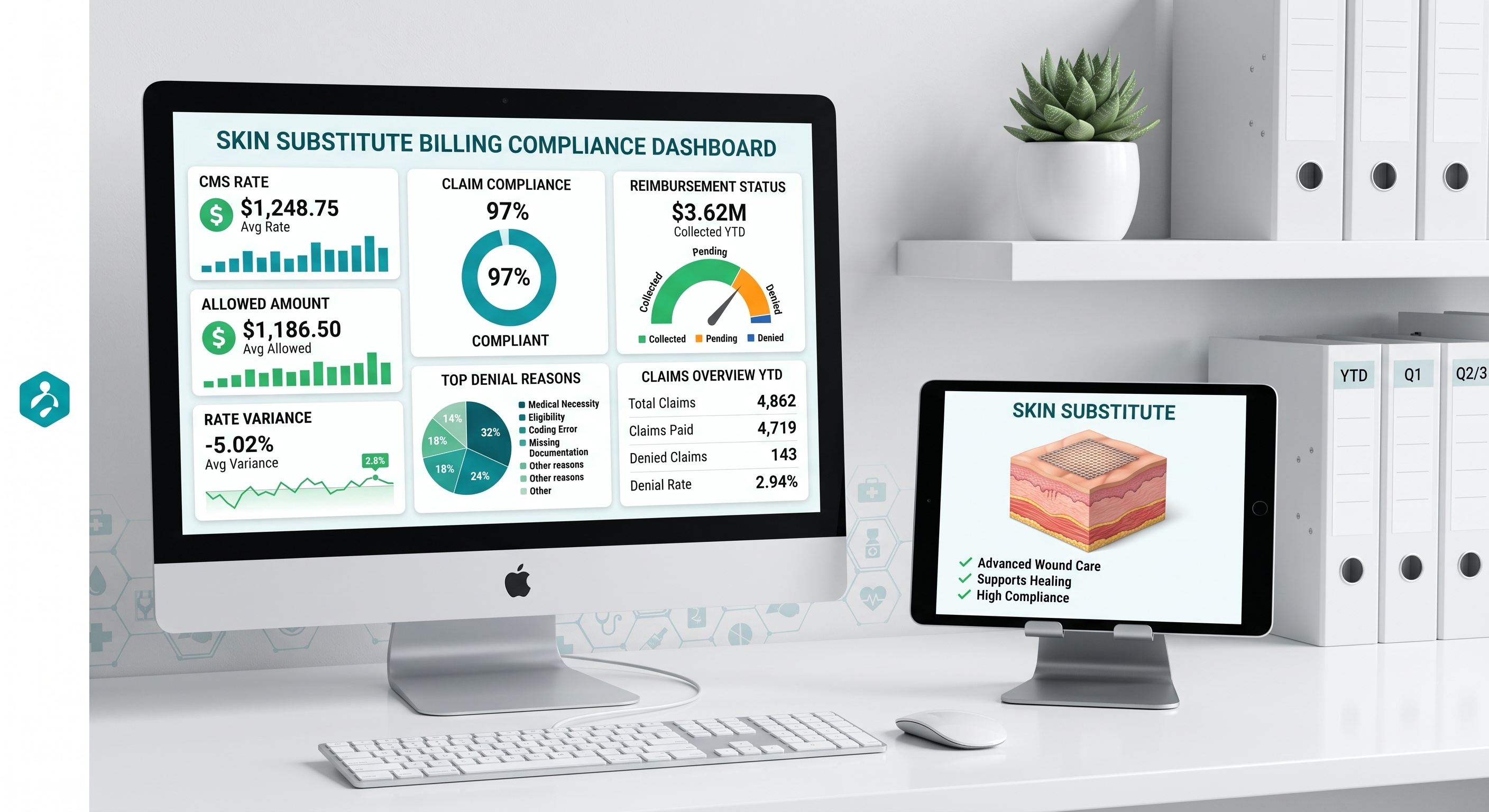
CMS finalized a new 2026 skin substitute payment rate and coding rules. See what changed, who is affected, and how to keep your billing compliant.
High dental accounts receivable? Learn 7 proven ways to reduce dental A/R, speed up claim follow-up, and improve cash flow.
Discover 10 costly cardiology billing errors causing revenue leakage in 2026. Learn how to fix undercoding, denials, modifier mistakes & more.
Learn what a fee schedule is in medical billing, how allowed amounts work, and why fee schedule management protects practice revenue in 2026.
Learn what teledentistry is, how it works, and the essential CDT billing codes (D9995, D9996) needed to get remote dental visits paid.
Learn what CDT code D2790 means, when it applies, what payers actually check, and how to keep full cast crown claims moving without denials.
Why the note in the chart, not just the code on the claim, determines whether a cardiology service gets paid in 2026.
Learn when to use Modifier 25 in cardiology, what documentation is actually required, and how to avoid common same-day billing denials.
Learn what CDT code D0210 covers, how it differs from panoramic imaging, and how to prevent frequency limitation denials.
Learn the three specific places where cardiology billing tends to leak revenue—and the disciplined processes to close those gaps.
How cardiology practices are using outsourced billing and RCM to combat declining reimbursements, rising staff costs, and complex coding requirements.
CPT 11732 only makes sense next to CPT 11730. This guide breaks down how the two codes work together and what documentation prevents denials.
Learn how cardiology practices can overcome business challenges, plug revenue leaks, and optimize collections with specialized medical billing services.
Most practices don't know their real denial reasons until someone looks.
Billing Guides
Specialties
Billing Guides
Credentialing
Credentialing
Credentialing
Credentialing
Credentialing
Credentialing
Billing Guides
Billing Guides
Billing Guides
Billing Guides
Billing Guides
Billing Guides
Revenue Cycle Management
Billing Guides
Healthcare Technology
Prior Authorization
Denial Management
Revenue Cycle Management
Medical Coding
Revenue Cycle Management
Medicare Billing & Compliance
Specialty Billing
Revenue Cycle Management
Specialty Billing
Medical Coding
Revenue Cycle Management
Medical Coding
Medical Coding
Revenue Cycle Management
Specialty Billing
Practical, easy-to-follow guides for healthcare practices, billing teams, and revenue cycle professionals.
The full claim lifecycle, from eligibility to payment posting.
Common denial codes, root causes, and appeal strategy.
Keeping days-in-A/R down and revenue leakage out.
CPT, HCPCS, ICD-10-CM, and modifier fundamentals.
Provider enrollment, CAQH, and recredentialing timelines.
What the 2026 CMS rule changed, and what it did not.
Your billing data can reveal where claims, payments, and revenue are getting stuck. Let our team review your current revenue cycle and identify opportunities for improvement.