Table of Contents
Introduction
CPT 11056 covers paring or cutting two to four benign hyperkeratotic lesions -- corns or calluses -- in a single encounter, using a scalpel or similar instrument with no anesthesia or tissue destruction. It's reported as a single unit covering all 2-to-4 lesions. The lesion count is what separates it from CPT 11055 (a single lesion) and CPT 11057 (more than four), and billing the wrong one of the three is a frequent source of claim problems.
A podiatrist pares down three calluses on the same foot during one visit. The chart is thorough, the diagnosis is documented, and the claim still gets kicked back -- because it was billed as three separate units of a single-lesion code instead of one unit of CPT 11056.
CPT 11056 exists specifically for that multi-lesion scenario, and mixing it up with the single-lesion code is one of the more common, avoidable errors in podiatry billing. Getting it right depends on counting lesions correctly, documenting each one, and making sure the diagnosis actually supports what was billed.
This guide covers what CPT 11056 represents, how it's different from CPT 11055, what documentation should look like, and where these claims tend to run into denials in 2026.
What Is CPT 11056?
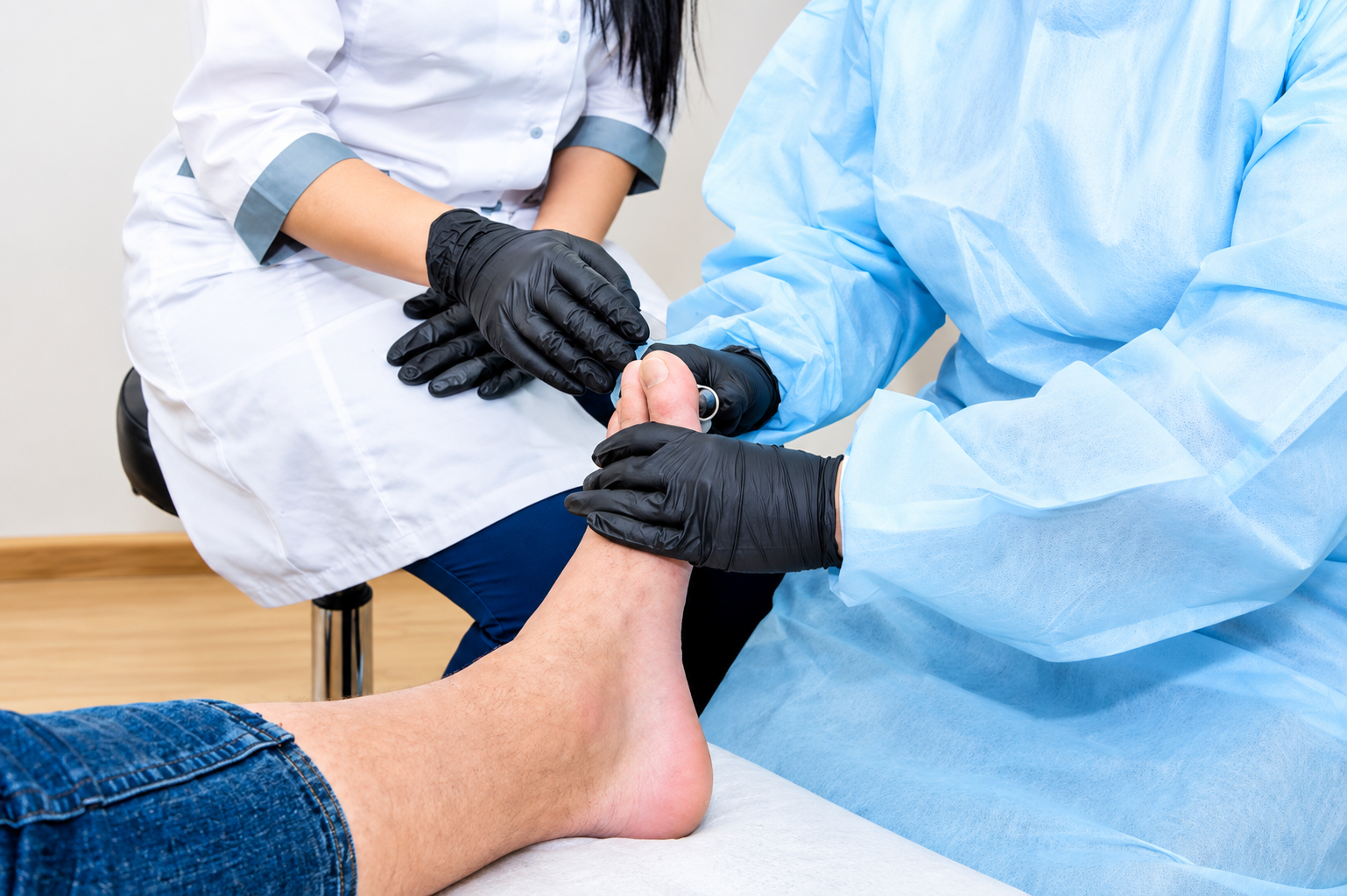
CPT 11056 describes paring or cutting two to four benign hyperkeratotic lesions -- corns or calluses -- during the same encounter. The technique itself is identical to what's used for a single lesion: a scalpel, curette, or similar instrument mechanically reduces the thickened skin. There's no anesthesia and no tissue destruction involved, which separates this code family from destructive lesion procedures.
What makes CPT 11056 relevant on its own, rather than just "11055 times a few," is that it's reported as a single unit covering the whole 2-to-4 lesion encounter -- not billed per lesion. Reporting multiple units of a single-lesion code instead of one correct unit of 11056 is a coding mismatch, even when the clinical work and documentation are otherwise solid.
CPT 11056 at a Glance
| Item | CPT 11056 |
|---|---|
| Service | Paring or cutting 2 to 4 benign hyperkeratotic lesions (corns or calluses) |
| Specialty | Podiatry, also billed by dermatology and primary care |
| Procedure Type | Minor integumentary procedure, no anesthesia or tissue destruction |
| Documentation Focus | Exact lesion count (2-4), location of each, and medical necessity |
| Medical Necessity | Frequently reviewed under routine foot care coverage policy |
| Payer Considerations | Modifier and coverage rules can differ by payer and plan |
CPT 11055 vs. CPT 11056
Choosing between these two codes comes down entirely to how many lesions were treated in the encounter -- not the general complaint or how long the visit took.
| Feature | CPT 11055 | CPT 11056 |
|---|---|---|
| General service | Paring/cutting a benign hyperkeratotic lesion | Paring/cutting benign hyperkeratotic lesions |
| Lesion count/category | Single lesion | 2 to 4 lesions |
| Key distinction | One unit, one lesion | One unit covers the entire 2-4 lesion encounter |
| Billing consideration | Billing this for multiple lesions undercounts the service | Billing this for a single lesion overstates the service |
Note: Picking the wrong code in either direction is a documentation/coding mismatch -- undercounting can mean lost revenue, and overcounting can mean an unsupported claim.
When Is CPT 11056 Appropriate?
CPT 11056 fits an encounter where exactly two, three, or four benign hyperkeratotic lesions were pared or cut using the same simple technique. If only one lesion was treated, that's CPT 11055; five or more is CPT 11057. The documentation needs to identify each lesion treated -- not just state a general count -- along with the diagnosis and clinical reasoning supporting the service.
Medical necessity, payer requirements, and diagnosis support all still apply here the same way they do for any lesion-count code in this family -- correct lesion counting is necessary, but it isn't the only requirement for a clean claim.
CPT 11056 Documentation Requirements
Note: Exact documentation requirements can vary by payer and clinical circumstance -- this is a general framework, not a universally mandated checklist.
CPT 11056 Medical Necessity
The relationship runs from the patient's condition to clinical documentation, to diagnosis, to medical necessity, to CPT 11056, to the applicable payer's policy, and finally to claim payment. A correctly selected CPT code alone doesn't guarantee reimbursement -- many payers, including Medicare in a range of circumstances, treat corn and callus paring as routine foot care, which is often excluded from coverage unless a documented medical necessity exception applies. That exception has to be supported in the chart, not assumed from the diagnosis alone.
CPT 11056 Billing & Coding Workflow
CPT 11056 Modifiers: What Should Practices Know?
There's no modifier that's universally required for CPT 11056. Where a modifier does come into play, it's typically because the claim is being billed under a routine foot care exception -- for example, some payers, including Medicare in certain contexts, use Q7, Q8, or Q9 modifiers to indicate a qualifying systemic condition. A modifier should only be applied when the chart genuinely supports the circumstance it represents, never simply to get a claim past an edit, and current requirements should be verified against the specific payer's policy before submission.
How Much Does CPT 11056 Reimburse?
There's no single national reimbursement figure for CPT 11056 that applies across every practice. Payment depends on the payer, geographic location, contract terms, the Medicare fee schedule where applicable, place of service, the patient's specific coverage, modifier use, documentation, medical necessity, and the individual payer's policy. Sirius Solutions Global doesn't publish or promise a specific reimbursement amount -- the applicable figure should be verified directly against the current Medicare fee schedule or the specific payer's fee schedule.
Common CPT 11056 Billing Mistakes
| Common Issue | Why It Can Matter |
|---|---|
| CPT doesn't match documentation | Billing 11056 when only one lesion, or more than four, was actually treated |
| Diagnosis doesn't support the service | The diagnosis on the claim doesn't reflect the documented condition |
| Incomplete documentation | The note doesn't clearly identify each lesion treated |
| Incorrect modifier use | A Q-modifier applied without chart support for the qualifying condition |
| Payer policy not checked | Assumes one payer's routine foot care rules apply universally |
| Claim information is inconsistent | Basic data errors slip through before submission |
| Denial is not followed up | Claims age without a defined process for resolution |
CPT 11056 Claim Denials: What Should Be Reviewed?
The appropriate response depends entirely on the actual denial reason. A lesion-count mismatch calls for a documentation and coding review, not a modifier change; a routine foot care denial calls for a coverage-exception review, not a resubmission with the same information. Changing a code simply to force payment is never the right response.
CPT 11056 Billing Checklist
- ☐ Service performed is clearly documented
- ☐ Diagnosis supports medical necessity
- ☐ Lesion count confirmed as 2 to 4
- ☐ Payer-specific requirements checked
- ☐ Modifiers reviewed and supported by documentation
- ☐ Claim information validated
- ☐ Claim submitted and tracked
- ☐ Denials or unpaid claims worked promptly
Does the Documentation Support the Claim?
| Question | Yes | No |
|---|---|---|
| Are all treated lesions individually identified? | ||
| Does the lesion count match what's billed? | ||
| Is the diagnosis consistent with the documented condition? | ||
| Is there support for a routine foot care exception, if applicable? |
Frequently Asked Questions
Disclaimer: This article is provided for general educational and informational purposes and does not replace current CPT instructions, payer policies, Medicare guidance, or professional coding advice. Coding, coverage, and reimbursement requirements may change, so practices should verify current requirements applicable to the specific claim and payer. CPT is a registered trademark of the American Medical Association.