Table of Contents
Introduction
An operative report lands in the billing queue. The surgeon executed a rotator cuff repair and concurrently performed a decompression, attaching 29826 to the ledger. Before transmitting the invoice, the administrative team must clear four distinct hurdles: Is the primary surgery on the federally approved list? Does the clinical narrative actually prove a decompression occurred? Are there any overriding bundling edits? And finally, does the patient's specific insurance policy cover this combination?
Mastering this code requires untangling those four variables. This manual breaks down the exact definition of the procedure, highlights the strict rules governing add-on status, outlines related shoulder interventions, and provides actionable steps to safeguard your orthopedic revenue.
What Is CPT Code 29826?
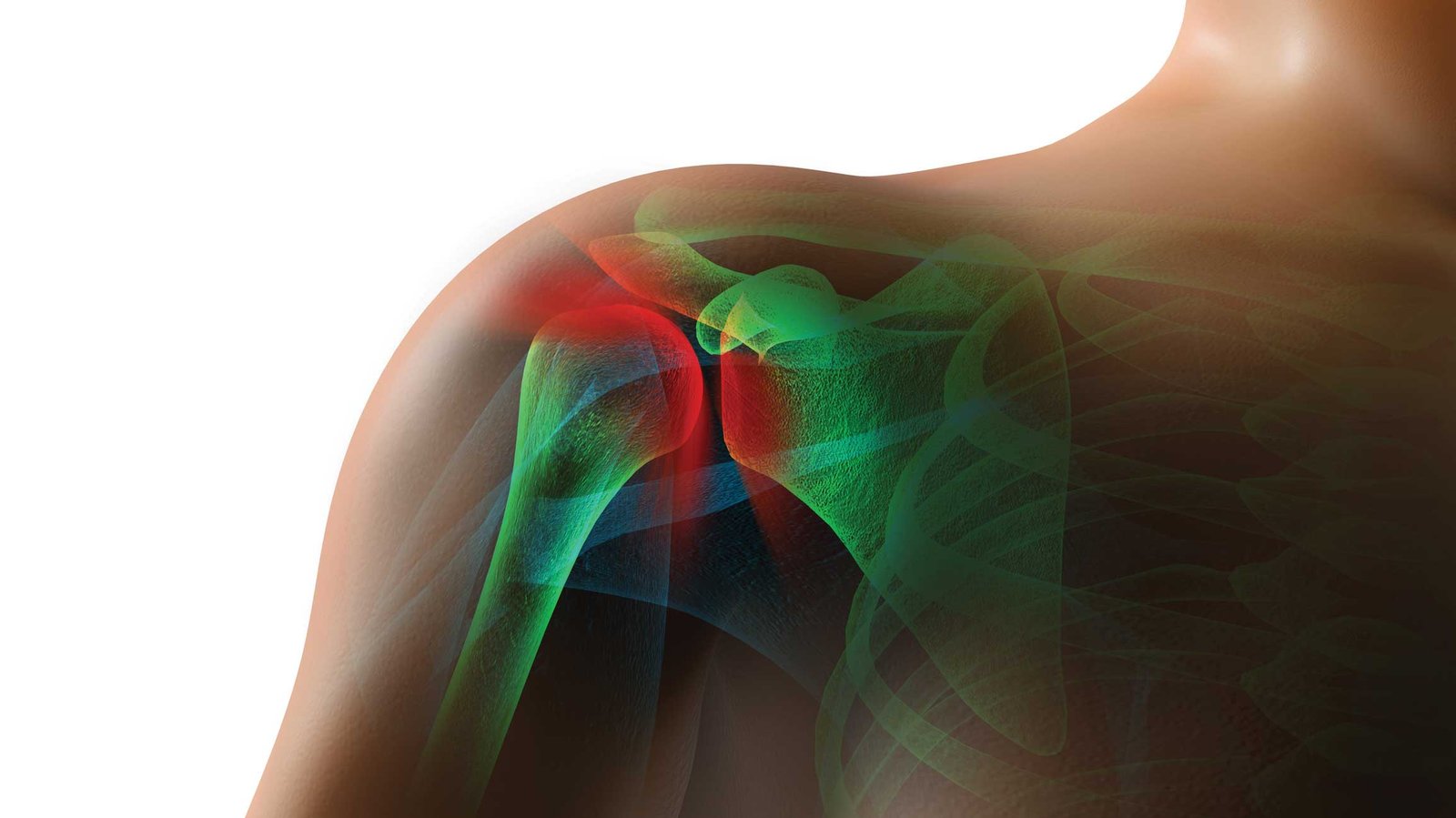
This identifier denotes an arthroscopic surgical intervention designed to decompress the subacromial cavity, which fundamentally includes a partial acromioplasty. If the surgeon opts to slice the coracoacromial ligament during the session, that work is automatically absorbed into this code as well. Essentially, the surgeon utilizes a scope to carve out more clearance above the rotator cuff.
Precision is mandatory. This marker exclusively represents arthroscopic work; you cannot deploy it for open shoulder surgeries, distal clavicle excisions, or generic decompression efforts that violate the strict clinical descriptor.
CPT 29826 Billing Guidelines for 2026
- Isolate the foundational primary shoulder arthroscopy code executed during the identical operative session.
- Audit the federal manuals to guarantee the primary code legally permits an add-on.
- Scrutinize the surgeon's narrative for undeniable proof of the decompression and acromioplasty.
- Cross-reference the latest NCCI edit tables to intercept automated bundling rejections.
- Consult localized carrier bulletins to confirm medical necessity parameters.
Do not conflate these rules. A code combination might be mathematically permissible under federal guidelines, but if the chart lacks detail, or the regional carrier deems the surgery medically unnecessary, the claim will still fail. Compliance does not automatically equal payment.
Why CPT 29826 Is an Add-On Code
Add-on status dictates that the service occurred concurrently with a heavier, primary intervention. Federal Medicare directors explicitly state that add-on codes are practically never funded if submitted in isolation. Transmitting 29826 without an anchor code is an administrative dead end.
Official industry manuals instruct coders to pair this service with codes ranging from 29806 through 29825, plus 29827 and 29828. You can spot an add-on code in the master directories by locating the plus symbol, noting the ZZZ global period flag on fee schedules, or querying the official federal add-on tables (updated most recently for October 2026). Always audit the live databases before finalizing an invoice.
Primary Codes Commonly Listed with +29826
| Procedure (Abbreviated) | Common CPT Codes |
|---|---|
| Shoulder capsulorrhaphy; SLAP lesion repair | 29806, 29807 |
| Loose body removal; partial and complete synovectomy | 29819, 29820, 29821 |
| Limited and extensive debridement | 29822, 29823 |
| Distal claviculectomy; lysis and resection of adhesions | 29824, 29825 |
| Rotator cuff repair; biceps tenodesis | 29827, 29828 |
This matrix serves as a generalized historical reference. Ensure absolute compliance by querying the active digital add-on files prior to executing a billing cycle.
Modifiers: Industry standards dictate that add-on codes inherently bypass modifier 51 logic, meaning appending it is both redundant and improper. Never attach an arbitrary modifier solely to force a rejected file through a digital gateway.
CPT 29826 vs. CPT 29824 and Other Shoulder Procedures
Simply because a physician executes multiple maneuvers during a single session does not mean you can bill for every single one. Defining the procedure, navigating edit pairings, and proving clinical justification remain totally independent hurdles.
| CPT Code | General Category | Relationship to 29826 | Key Billing Consideration |
|---|---|---|---|
| 29824 | Distal claviculectomy (Mumford) | Listed primary in the CPT instruction | Distal clavicle work is not decompression; verify each is documented |
| 29822 | Limited debridement | Listed primary in the CPT instruction | Medicare shoulder arthroscopy includes limited debridement |
| 29823 | Extensive debridement | Listed primary in the CPT instruction | Medicare includes it with exceptions; check the edit and area treated |
| 29827 | Rotator cuff repair | Listed primary in the CPT instruction | A common pairing; industry monitors report payer denials, so verify policy |
| 29828 | Biceps tenodesis | Listed primary in the CPT instruction | Verify the edit file and report |
| 29806 | Capsulorrhaphy | Listed primary in the CPT instruction | Confirm the report supports both services |
| 29807 | SLAP repair | Listed primary in the CPT instruction | Confirm the report supports both services |
The 2026 iteration of the federal Correct Coding Initiative explicitly mandates that standard shoulder arthroscopies inherently absorb limited debridement. Furthermore, extensive debridement is generally bundled into the main surgery, barring three highly specific exceptions (29824, 29827, and 29828) where the debridement occurs in a totally disparate zone of the same shoulder. The manual heavily restricts overriding shoulder pairings with modifiers, so verify the exact edit indicator rather than guessing.
CPT 29826 Documentation Requirements
The surgical dictation must vividly and accurately reconstruct the event. Altering a finalized chart retroactively to salvage a denied code is a monumental compliance breach.
| Checkpoint | What to Verify | Why It Matters |
|---|---|---|
| Indication and diagnoses | Pre- and postoperative diagnoses and clinical indication | Supports medical necessity |
| Primary procedure | The arthroscopic procedure performed | Establishes the add-on dependency |
| Decompression | Subacromial decompression and partial acromioplasty described; ligament release if performed | Matches the code descriptor |
| Findings and approach | Operative findings, anatomy and approach | Supports the service and distinguishes arthroscopic from open |
| Other procedures | Any additional shoulder procedures | Drives edit review |
| Claim details | Laterality, authorization, payer-specific records | Prevents avoidable rejections |
Use this interactive module to track your operative report audit prior to dispatch.
Medical Necessity and Payer Coverage
Securing add-on status mathematically does not force an insurer to issue a check. Executing the surgery flawlessly, charting it perfectly, and satisfying the carrier's internal medical policy are completely separate battles.
Professional societies continuously push back against massive commercial networks that attempt to classify subacromial decompressions as medically unnecessary across the board. While industry negotiations are ongoing, your immediate focus must be auditing the specific policy manual of the carrier you are billing. Blanket denials are common in certain networks, and formal appeals—even well-documented ones—are never guaranteed to prevail.
CPT 29826 Reimbursement in 2026
Final compensation relies entirely on the surgical environment and the specific carrier. Medicare allocates professional fees by calculating Relative Value Units, adjusting for regional geographic variance, and applying the annual conversion rate. Contrastingly, facility payouts (like ASC or hospital outpatient departments) leverage entirely separate mathematical algorithms.
- Confirming eligible primary and add-on reporting hierarchies.
- Isolating professional vs. facility environments, place of service, and locality.
- Navigating modifiers, participation status, and proprietary commercial contracts.
- Balancing coverage policies against the patient's deductible burden.
For precise projections, utilize the live CMS Physician Fee Schedule databases. Remember: a dollar figure listed next to an add-on code does not constitute a guaranteed standalone payment.
| Term | Meaning |
|---|---|
| Billed charge | What the practice charges |
| Allowed amount | What the payer or contract recognizes |
| Payer payment | What the payer actually pays, after any adjustments |
| Patient responsibility | Deductible, coinsurance or copay |
| Final collections | What is actually collected after payer and patient payments |
Common CPT 29826 Billing Errors and How to Prevent Them
| Error | Prevention Step |
|---|---|
| Reporting 29826 without an eligible primary procedure | Confirm the primary code before building the claim |
| Using an outdated primary-code list | Check the current CPT instruction and add-on file |
| Billing when the report does not support it | Compare the report with the descriptor |
| Confusing arthroscopic and open procedures | Verify the approach in the report |
| Confusing 29826 with distal clavicle excision | Confirm which structures were treated |
| Assuming related codes always combine | Check the current PTP edit and modifier indicator |
| Appending modifiers unchecked | Verify current modifier guidance |
| Missing laterality or claim details | Add to the pre-submission checklist |
| Skipping authorization or necessity checks | Review payer policy before submission |
| Ignoring recurring denials | Review denial patterns on a schedule |
How to Review a CPT 29826 Claim Before Submission
1. Is there a documented primary shoulder arthroscopy procedure?
2. Is that primary procedure eligible under the current code instructions?
3. Does the operative report support arthroscopic subacromial decompression?
4. Have current NCCI edits and modifier rules been checked?
5. Have payer coverage and medical necessity requirements been reviewed?
Frequently Asked Questions
References and Further Reading:
CMS, 2026 Medicare NCCI Policy Manual, Chapter IV: https://www.cms.gov/files/document/04-chapter4-ncci-medicare-policy-manual-2026-final.pdf
CMS, Medicare NCCI Add-on Code Edits: https://www.cms.gov/medicare/coding-billing/national-correct-coding-initiative-ncci-edits/medicare-ncci-add-code-edits
AAOS, Shoulder Arthroscopy Appeals Resources: https://www.aaos.org/quality/coding-and-reimbursement/resources-to-support-coding-appeals/shoulder-arthroscopy-appeals/
CMS, Physician Fee Schedule lookup tool: https://www.cms.gov/medicare/physician-fee-schedule/search/overview
CMS, PFS national payment amount files: https://www.cms.gov/medicare/payment/fee-schedules/physician/national-payment-amount-file
Disclaimer: This material serves strictly as educational orientation and does not substitute for binding legal, clinical, or specialized billing counsel. NCCI algorithms, CPT descriptors, and commercial carrier mandates fluctuate continuously. Establish active protocols to verify current instructions directly with CMS and the AMA before executing any billing maneuver. Sirius Solutions Global does not promise exact financial recoveries, the eradication of all denials, or specific audit outcomes. CPT is a registered trademark of the American Medical Association.